Vital Stats
Main Town
Dharamshala
Total Area
5,739 sq km
Population
1.51 Million
Points of Interest
Dharamshala & McLeod Ganj
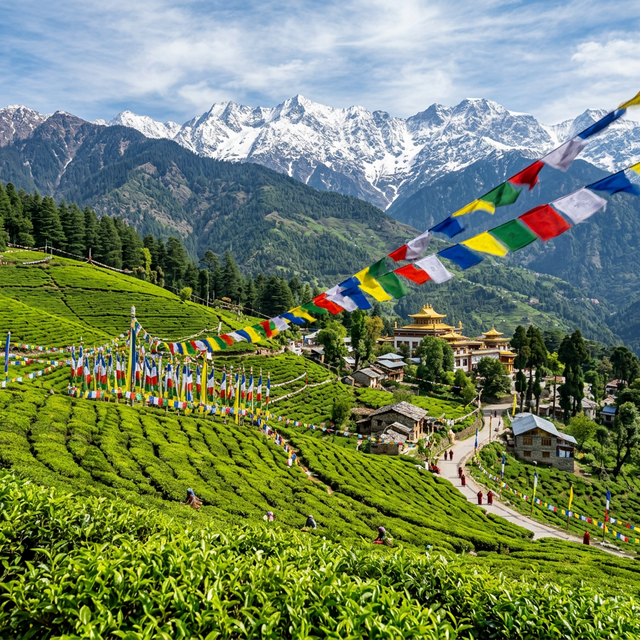
The spiritual home of the Dalai Lama, surrounded by cedar forests and prayer flags.
Kangra Fort
One of the oldest and largest forts in India, offering panoramic views of the valley.
Masroor Rock Cut Temple
The 'Ellora of the Himalayas', a complex of 15 monolithic rock-cut temples.
Kangra —
The ancient seat of the Trigarta kingdom.
Kangra is a land of spiritual peaks and historical depth, home to the mighty Dhauladhar range and the spiritual center of Dharamshala.
Heritage Timeline
Anciently known as Trigarta, Kangra has a recorded history spanning over 3,500 years. It is home to one of the world's oldest surviving royal lineages, the Katoch dynasty. The Kangra Fort, a masterpiece of Himalayan architecture, has withstood numerous invasions. The first recorded invasion was by Mahmud of Ghazni in 1009 A.D., who plundered the fort for its fabled treasures. It was later captured by Muhammad bin Tughluq (1337) and Firuz Shah Tughluq (1351). In 1620, Mughal Emperor Jahangir successfully subdued the fort after a prolonged siege, and it remained under Mughal administration for over 160 years. Raja Sansar Chand reclaimed it in 1786, only to lose it to Maharaja Ranjit Singh and eventually the British East India Company in 1846. The devastating 1905 earthquake marked the end of its military use, but it remains a symbol of resilience today.
Cultural Essence
Kangra is the heart of the 'Kangra School of Painting', known for its delicate brushwork and vibrant depictions of Lord Krishna. The region's culture is deeply spiritual, featuring major temples like Jwalamukhi, where an eternal flame burns without any known fuel source, and Brajeshwari. The 'Kangra Dham' is a culinary heritage where food is cooked in traditional brass charotis. The Gaddi tribes add a nomadic charm with their unique folk music, like 'Musaddi', and traditional dances.
Seasonal Guide
Climate & Packing.
Peak Summer
20°C - 35°C
Usually spanning March to June. This is the golden window for high-altitude trekking and escaping the tropical heat of the Indian plains. The air is crisp, and the trails are clear.
Deep Winter
0°C - 15°C
Usually November to February. Upper reaches transform into a white desert of snow, while the valleys enjoy a sharp, cold sun. Perfect for winter sports and cozy mountain living.
Monsoon Dynamics
"Substantial rainfall, lush green valleys but potential travel delays"
Essential Packing
Breathable cottons for summer, light woolens for winter evenings
Expedition Hub
Adventure & Pure Nature.
Expedition Planning
Curated Journeys.
Select Experience
Experience Profile
"Experience the spiritual vibrations of McLeodganj and the ancient roots of Kangra."
Spiritual McLeodganj
Arrive in the vibrant town of McLeodganj. Visit the serene Dalai Lama Temple and end your day at Naddi for a majestic view of the Dhauladhar range.
Key Milestones & Activities
Travel Intelligence
Getting to Basecamp.
Air Travel
Gaggal (Kangra) - 13 km
Primary Hub
Rail Link
Pathankot (Broad Gauge) - 90 km
Nearest Station
From CHD
230 km
Road Distance
From Delhi
480 km
Road Distance
Cultural Calendar
Heritage & Fairs.
Bir Music Festival
A unique gathering of mountain music and paragliding culture.
Shravan Ashtami Festival
A major pilgrimage event at the Brajeshwari Devi Temple.
Makar Sankranti Fair
A week-long celebration at the Brajeshwari Temple with sacred rituals.
Visual Archive
Capturing the Heights.
Featured View
Kangra Landscape
Community
stills incoming
District Flavors
Culinary Heritage
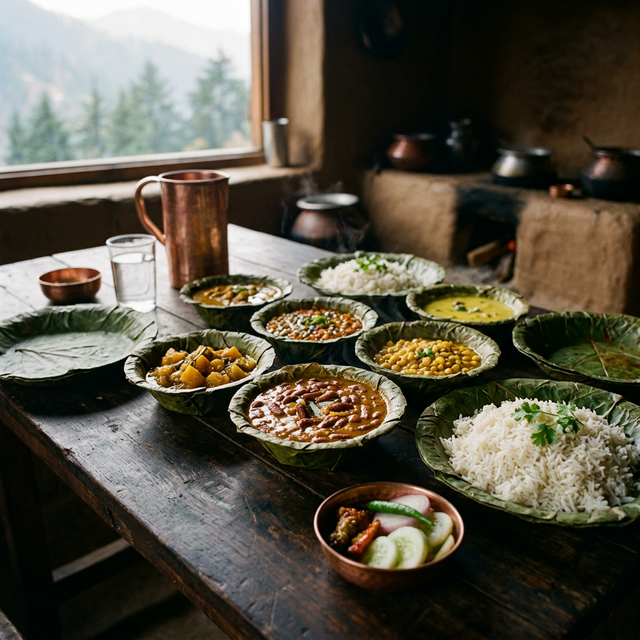
Kangri Dham
"A traditional multi-course meal served on leaf plates, featuring slow-cooked pulses and madra."
Archival Context
Dham was originally a ritual food prepared by Brahmin cooks (Bolted) for royal celebrations and festivals.
Best experienced during local weddings or temple festivals.
Nature Registry
Biodiversity Archive
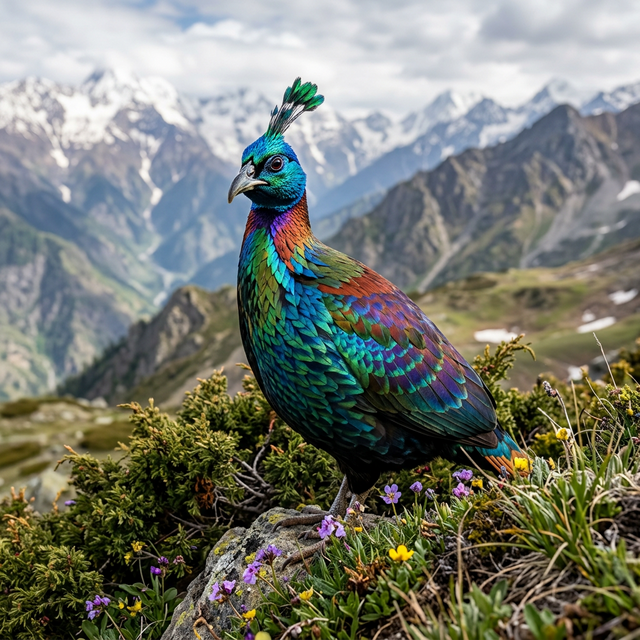
Himalayan Monal
Lophophorus impejanus
A stunning bird with iridescent metallic plumage seen in the higher reaches of Dharamkot.